My old company (car company with a blue logo with white letters, you know, the squarish one) would hire the best of the best, the flower of American universities and then try and keep them. Starting pay was good, maybe toward top of the median. My job was to keep the best while paying them at the high average out of love of cars and family.
The recruiting process was meant to winnow the Seniors at a major university from 500 screened to maybe 8 hired. THEN we had to keep them. My team usually had some new recruits and some people who were transitioning. Maybe they ended up in the wrong seat on the bus and were looking for a reset? I also found oak trees to help the team along.
A leadership challenge: How to place a new fired-up trooper in an entry level job and then push them through rapid job transitions? I thought it brilliant that I projected my own impatience and emotional career rollercoaster into the Job Happiness Plot
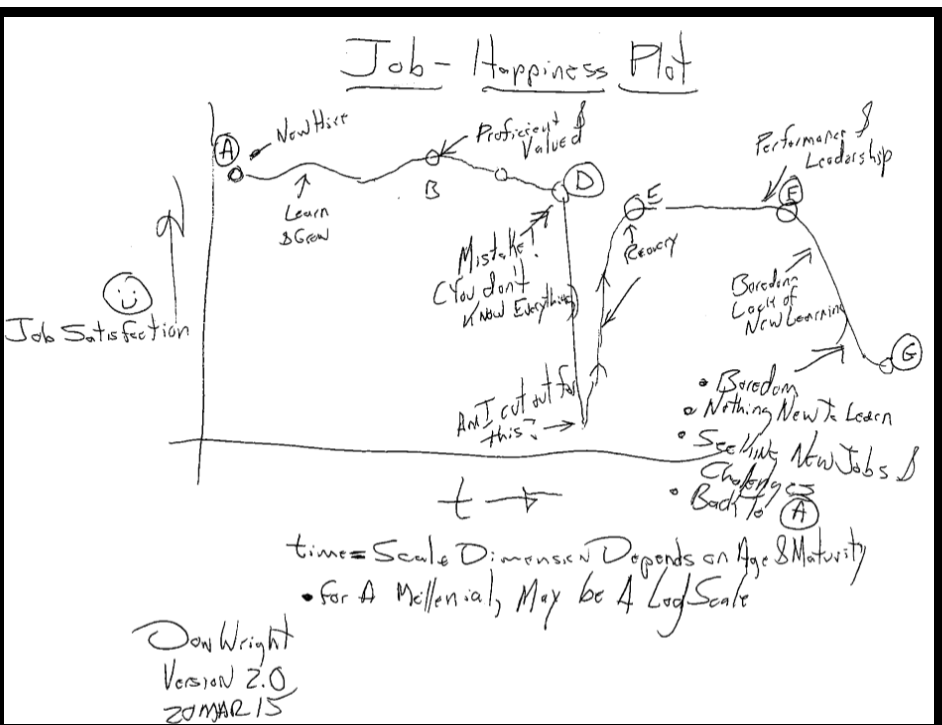
You get a new job, you are over the moon to have won the spot over competition. Pretty full of yourself. Next you learn and achieve and feel belonging and accomplishment. There will be a fall due to: Overconfidence? An Honest Mistake? You don’t know everything? All of the above?
Hopefully, you have a boss who expects it and maybe even let you get too far out on your tether so you could have a learning moment (without hurting the mission).
The point of the job happiness curve was to show young people that it’s fair to be happy and excited, but beware of he inevitable fall.
I would point out that the tail of the time-happiness curve contains boredom and a need to take on new challenges. You need new shocks or stretch to produce endorphins and eventually produce dopamine.
The time horizon and rise and fall of happiness depends on career stage and challenges. I wanted the young-uns to recognize the flow, manage emotions and expectations keep rising.
It turns out, I didn’t invent the Job Happiness Curve, it seems to be the Dunning-Kruger Effect which is mapping confidence (which I equate to comfort or happiness) to ability. Their definition is “a cognitive bias in which people with low ability at a task overestimate their ability. It is related to the cognitive bias of illusory superiority and comes from the inability of people to recognize their lack of ability.”
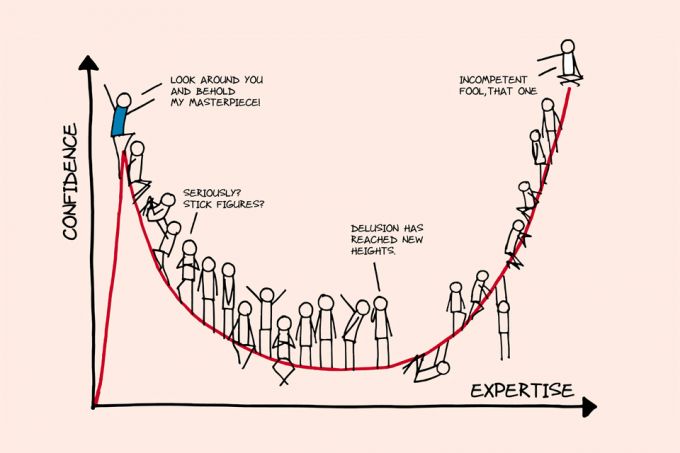
So, what if you make it to the point of a pyramid, achieving levels of support / ego boosting and confidence building through the hiring process?
What do you think of yourself? Full of Oxytocin and Dopamine (see Leaders Eat Last). You feel loved and full of confidence.
Then you learn that you DON’T know enough to be king of your mountain. You need to learn. Hopefully, you’ve joined a tribe that is supportive when you fall or fail.
The in-between is the chart I found on Wait But Why (another great reader website, you have to be prepared and strap in for a ride) that shows Conviction vs. Knowledge. Conviction is your assuredness (Dopamine) from the Oxytocin you’ve mined from your team and surroundings. As you can see, he models your state of learning and shows what I see as the inevitable fall (rolling down childs hill.
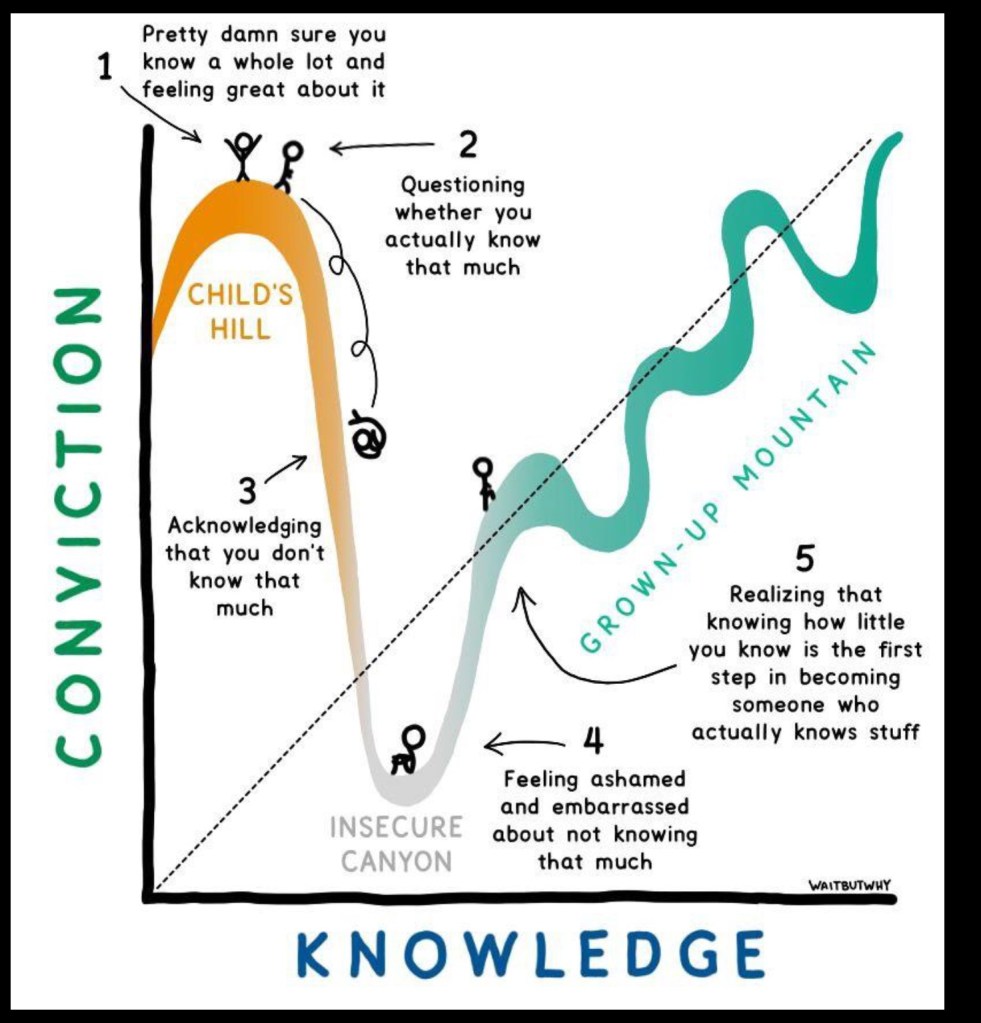
So, I’m good with my original, sad, hand drawn nonsense: Thesis was organically generated during counseling an impatient high flyer. I may have been projecting or over-explaining, who knows, my folks were generally harder working and smarter than me. The point is that (in the HUGE car company with a squarish blue logo) you are in a career cycle with ups and downs based on accomplishment which will result in boredom. It’s on you search for a new challenges and be ready to ride the curve all over….(job happiness curve).
The only time it is a failed concept is when you have no need to improve or change. There were people on the team like that; that’s another leadership issue. Maybe I’ll find a hook and hang personal Kaizen (continuous improvement) in a new post some day.
 Don Wright's Chataqua